 Skip Hire Harlesden — Insurance & Safety Commitment
At Skip Hire Harlesden we prioritise safety and legal compliance. As an insured rubbish company serving residential and commercial clients, our approach combines robust insurance cover with practical on-site safety measures. This page explains why choosing an insured waste removal company matters, how our public liability insurance protects clients and the public, and how staff training and PPE form the backbone of safe operations.
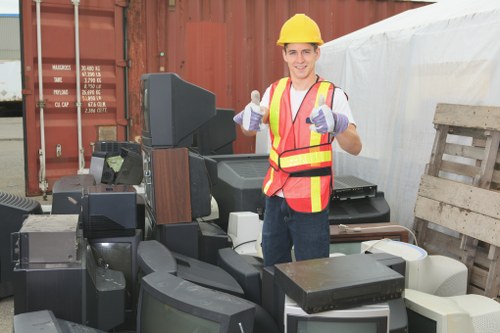 Why an insured skip hire company makes a difference: working with an insured rubbish removal provider ensures that accidents, unintended property damage or third-party injuries are covered by professional policies. Our policies are designed to protect property owners, contractors and members of the public in the unlikely event of an incident. We maintain clear documentation of our insurance status so customers can have confidence in the contractor they engage.
Public Liability Insurance — What We Carry and Why It Matters
 We maintain comprehensive public liability insurance with cover levels appropriate to the risks associated with skip hire and waste removal activities. Our insurance covers:
- Third-party bodily injury — compensation for injuries to members of the public caused by our activities.
- Property damage — repair or replacement costs for accidental damage to client property or public infrastructure.
- Legal defence costs — assistance with defending legitimate claims related to our operations.
We responsibly select insurers and maintain policies with adequate limits to reflect the scale of our fleet and operational footprint. As an insured waste contractor, we also undertake regular reviews of cover limits to ensure ongoing adequacy as our service offering changes.
Staff Training and Competence
 Training is the first line of prevention. Our team completes mandatory induction training and specialised modules depending on role and risk exposure. Training topics include manual handling, safe loading and unloading of skips, highway safety and traffic management, correct segregation of waste streams and handling of potentially hazardous materials.
Key elements of our staff training programme include:
- Induction and site-specific briefings — all operatives receive an initial induction and specific briefings for each job.
- Periodic refresher training — scheduled sessions to reinforce safe working practices and update staff on regulatory changes.
- Licensing and qualifications — verified competence for drivers and machine operators, including holder checks for any required certifications.
We use competency checks and practical assessments to ensure all team members deliver services safely and consistently. Our position as an insured rubbish removal provider depends on staff competence as much as policy coverage.
 Personal Protective Equipment (PPE) — standards and enforcement
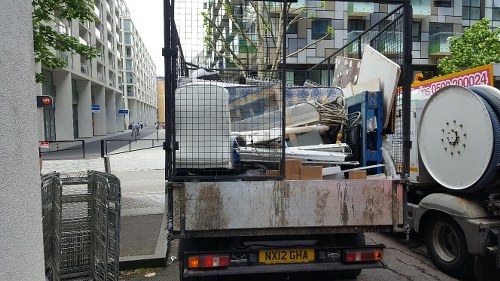
PPE is mandatory for operational staff and is selected to match identified hazards. Items provided, maintained and enforced include:
- Hi-visibility clothing for roadside and site operations
- Safety footwear with penetration-resistant soles
- Gloves suitable for handling mixed waste, hazardous fragments and sharps
- Eye and respiratory protection where dust, fumes or projections are likely
We conduct regular PPE audits and ensure equipment is replaced and cleaned according to manufacturer guidance. Supervisors enforce PPE use and intervene immediately when lapses are observed; this practical culture reduces incidents and supports insurance compliance.
Risk Assessment Process — systematic and repeatable
Our risk assessment process is structured to identify, evaluate and control hazards for every job. The process comprises:
- Pre-site assessment — desktop checks for access restrictions, parking, underground services and waste types.
- Site survey — a visual inspection on arrival to confirm conditions, safe placement of skips and segregation requirements.
- Task-based risk assessments — documented assessments for lifting, traffic management, team movements and use of plant.
- Dynamic risk assessment — the team continually evaluates changing conditions and implements control measures immediately.
Records of risk assessments, toolbox talks and incident reports are maintained to support continuous improvement and meet insurer expectations. Where hazardous waste is identified, we apply relevant controls and liaise with authorised handlers to ensure legal compliance.
Operational checks, audits and continuous improvement
Insurance is most effective when combined with strong operational discipline. We carry out:
- Routine fleet and equipment inspections to reduce mechanical failures.
- Safety audits to verify compliance with documented procedures.
- Incident investigations that deliver corrective actions and training updates.
By integrating insurance, staff training, PPE and a clear risk assessment process we deliver reliable and safe skip hire services. Choosing a reputable, insured skip hire company like ours means you are working with a provider that protects people, property and the environment through prudent risk management.